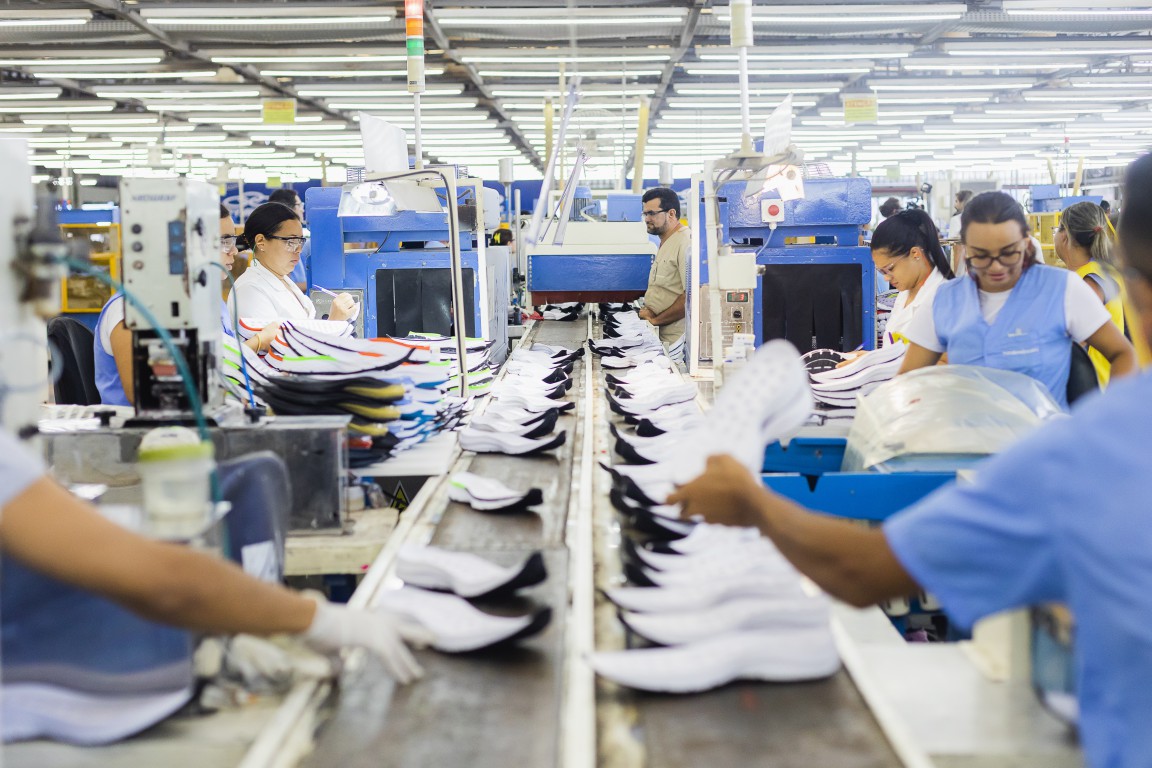

The hearing took place on the morning of July 7 at the U.S. International Trade Commission (ITC) in Washington, D.C
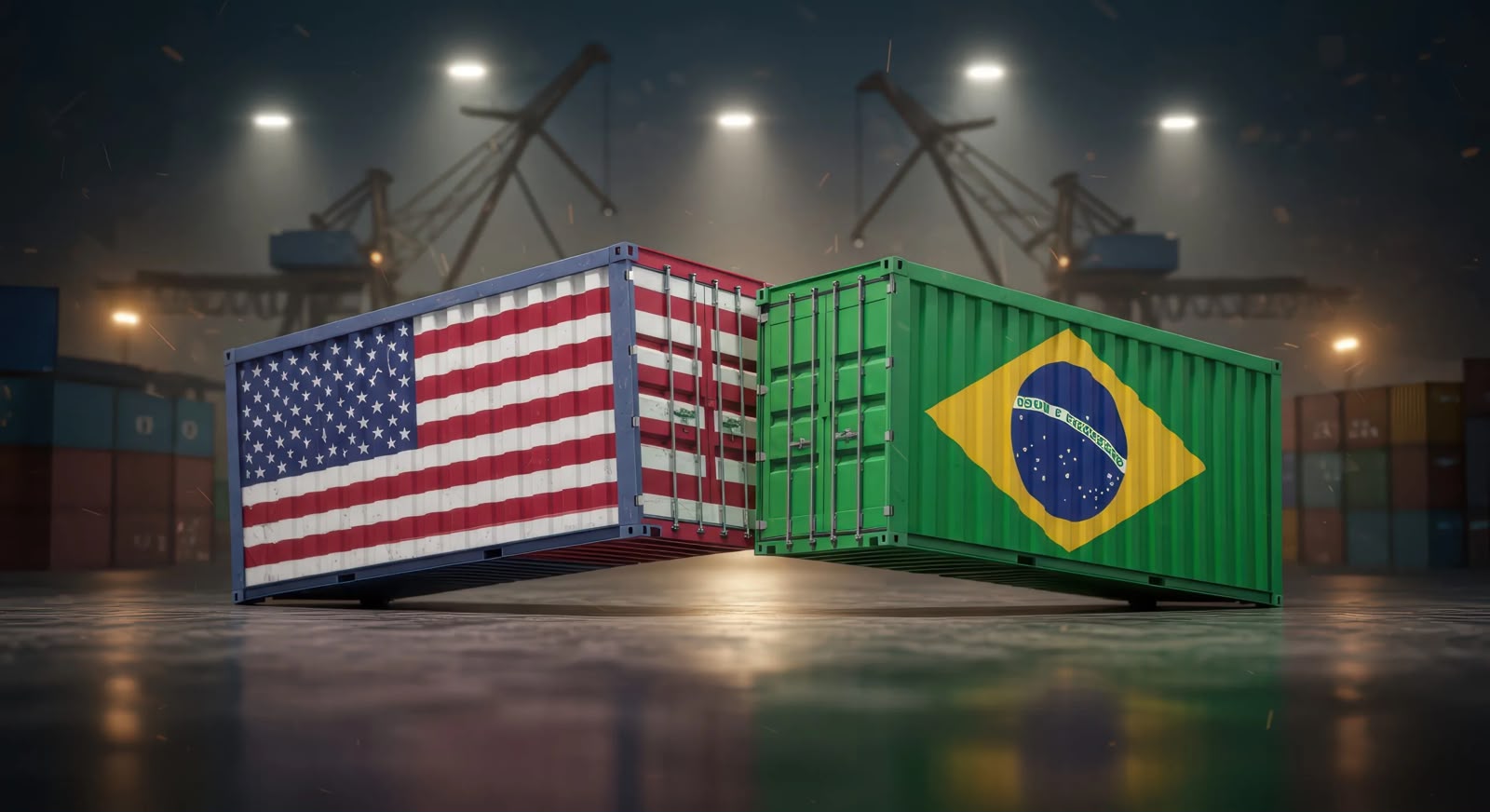
The Brazilian Footwear Industries Association (Abicalçados), represented by its Relationship and Business Manager, Letícia Sperb Masselli, participated in a public hearing held by the Office of the United States Trade Representative (USTR) on the proposed tariffs on Brazilian exports. The hearing took place on the morning of July 7 at the U.S. International Trade Commission (ITC) in Washington, D.C., where testimony was heard. In addition to Letícia, representatives from U.S. footwear and apparel industry organizations also spoke against the proposed tariffs, including Matt Priest of the Footwear Distributors & Retailers of America (FDRA), Beth Hughes of the American Apparel & Footwear Association, and Julia K. Hughes of the United States Fashion Industry Association. U.S. retailers were also represented, with testimony from Peter Grueterich of JPT Group LLC / Bernardo Footwear and Lauren Gray of Dillard’s Inc.
According to Letícia, the remarks presented by Abicalçados, together with those from representatives of the U.S. footwear industry, retailers, importers, and distributors, were highly technical and presented in a clear and organized manner. “The statements made by the U.S.-based stakeholders were unanimously supportive of Brazil, highlighting above all the impact the proposed tariffs would have on the U.S. market, which has very limited domestic footwear production,” she said.
In her statement, Letícia emphasized that the United States has historically been the leading destination for Brazilian footwear exports, accounting for a significant share of the industry's international sales. “This trade flow benefits not only Brazilian exporters, but also U.S. importers, brands, retailers, and consumers, given the close production and trade ties between the two countries. This makes Brazil a strategic supplier in a market that is structurally dependent on imports,” she said.
According to Letícia, Brazil plays a relevant and complementary role in the U.S. footwear supply chain. “The Brazilian footwear industry works closely with U.S. importers, brands, and retailers in the development of products and collections, particularly in segments that require smaller production runs, a wider variety of styles, shorter lead times—especially due to Brazil’s logistical proximity—and greater responsiveness to market demand. These are all key attributes for ensuring the efficient supply of the U.S. market, particularly for small and Alternative to Asia
Letícia also noted that Brazil represents a strategic sourcing alternative with significant manufacturing capacity in the Western Hemisphere, supporting U.S. efforts to diversify sourcing and create a more resilient and geographically closer supply chain. Brazil is currently the world's fifth-largest footwear producer and the largest outside Asia, having manufactured 847 million pairs in 2025.
Although the United States imports footwear from a wide range of countries, Letícia pointed out that supply remains heavily concentrated in Asia. In terms of volume, China accounts for the largest share, with 48%, followed by Vietnam (28%) and Indonesia (10%).
Local Impact
An additional tariff on Brazilian footwear would reduce the competitiveness of a reliable, transparent, Western source of supply that complements existing sourcing strategies. This would directly affect importers, brands, and especially small and medium-sized U.S. retailers, whose business models depend on smaller orders, a broader product mix, and shorter production and delivery cycles. The United States consumes more than 2 billion pairs of footwear annually while producing only around 20 million pairs—the equivalent of approximately 1% of its domestic consumption. “For these reasons, an additional tariff on Brazilian footwear would do little to address the issues under investigation. On the contrary, it would likely increase costs, reduce supply diversification, and further concentrate U.S. sourcing in countries that already dominate the market, running counter to U.S. interests in diversification, supply chain resilience, and supply chain security,” Letícia concluded.
According to data compiled by Abicalçados, Brazilian footwear exports to the United States totaled 5.6 million pairs, valued at US$82.25 million, in the first half of 2026. Compared with the same period last year, exports declined 3.6% in volume and 23.6% in value.
Background
On June 2, the Office of the United States Trade Representative (USTR) proposed an additional 25% tariff on Brazilian exports to the United States. Although the measure, proposed as part of a Section 301 investigation, may still be reversed, it has raised concerns within the Brazilian footwear industry.
The proposal was open for public consultation through July 1. On July 6 and 7, the USTR held public hearings, during which Brazilian and U.S. government officials, industry representatives, and representatives of U.S. importers and retailers provided testimony. The USTR has until July 15 to conclude the investigation and announce its final decision.
-thumb.jpg)
-thumb.jpg)
-thumb.jpg)
-thumb.jpg)